Pre-Qingming green tea is harvested before the Qingming Festival, usually between mid-March and early April across China’s eastern tea regions. The early flush is prized for tender buds, high amino acid content, and a soft chestnut-floral character, but it is also one of the least forgiving green teas once it leaves the factory. Buyers who treat it like a dry grocery product usually reorder too late; buyers who treat it like fresh produce often hold too little. The practical answer is a deliberately short distribution window, supported by cold-chain or nitrogen-flushed packaging—not an open-ended shelf life.
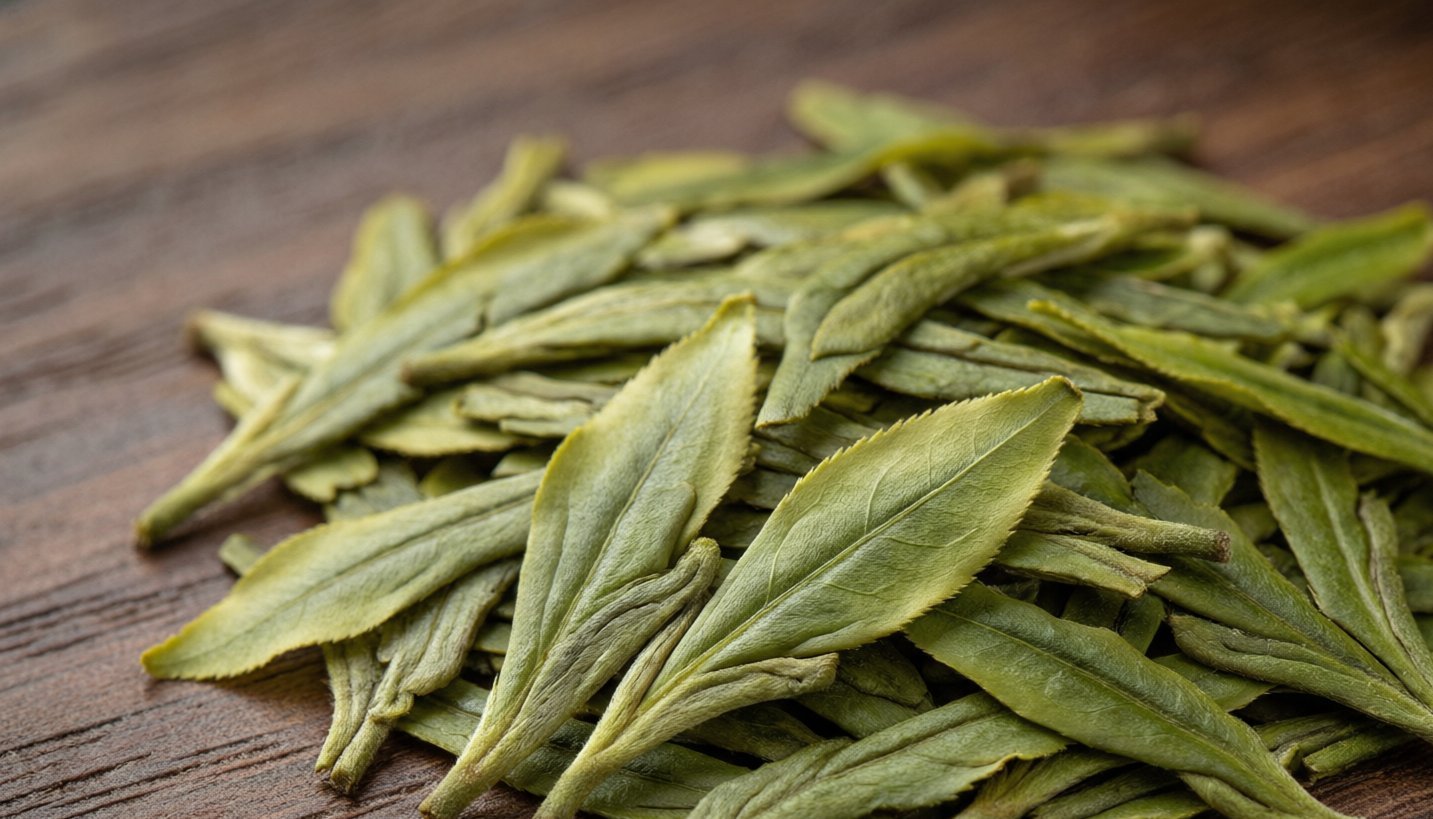
Why Pre-Qingming Green Tea Goes Stale So Fast
Green tea standards define the product as an unfermented tea made by enzyme inactivation, and both Chinese and international standards treat it as a fresh product whose quality depends heavily on storage protection [1][2]. Pre-Qingming lots are especially sensitive because their value sits in volatile aroma compounds, bright green color, and a delicate sweet finish. Once exposed to heat, oxygen, moisture, light, or strong odors, those characteristics fade before the tea becomes unsafe to drink.
Storage research consistently identifies time, temperature, oxygen, and light as the main quality drivers for green tea [3]. Unlike dark tea or aged white tea, Pre-Qingming green tea is not a category where age adds value. It is a category where freshness is the product.
How Long Pre-Qingming Green Tea Actually Keeps
The windows below assume intact packaging, sound factory drying, and leaf moisture at or below the 7.0% limit commonly used in green tea specifications [1]. They are practical quality targets rather than legal expiration dates, so confirm each lot against its own moisture report and packaging format.
| Storage condition | Temperature | Practical quality window |
|---|---|---|
| Sealed retail pack at room temperature | 20–25°C | 3–6 months for best aroma; up to 12 months if nitrogen flushed |
| Cool, dry cellar or stockroom | 10–15°C | 6–9 months |
| Refrigerated warehouse | 0–5°C | 12–18 months |
| Frozen storage, unopened vacuum pack | -18°C | 18–24 months |
| Opened pack at room temperature | 20–25°C | 2–4 weeks for peak flavor |
For importers, the key number is not the maximum safe date. It is the point where the tea still tastes like the sample your customer approved. In our experience, many Pre-Qingming complaints trace back to a pack that was still technically “in date” but had already lost its spring character.
Storage Rules That Work
- Move it cold before it moves far. If the lot will sit longer than 60 days, refrigerated storage at 0–5°C protects color and aroma far better than a warm warehouse.
- Keep it dry. Store in a low-humidity environment and avoid condensation when boxes move from cold storage to a warm dock. Let sealed packs reach ambient temperature before opening.
- Block light. Use opaque foil, metallized film, or closed cartons. Clear glass jars and transparent pouches are fine for daily use, not wholesale holding.
- Reduce oxygen. Nitrogen flushing, vacuum packing, and oxygen absorbers all slow aroma loss. Once a pack is opened, press out air, seal tightly, and use it quickly.
- Segregate odors. Tea leaf absorbs surrounding smells. Do not store Pre-Qingming green tea near spices, coffee, cleaning agents, or strong-smelling packaging materials.
- Rotate by harvest date, not arrival date. The clock starts at picking, not at the port. First-in, first-out is not enough if older-harvest lots arrived later.
Need a Pre-Qingming batch packed for cold-chain or nitrogen-flush before it leaves the factory? Send your specification and target volume to 427728483@qq.com and ask for moisture reports, storage trials, or cupping samples.
Packaging Choices That Extend Shelf Life
Bulk, bag, and retail formats do not protect tea equally. For wholesale, foil-lined sacks of 10–25 kg with an inner food-grade liner are the standard bulk choice, but they only hold freshness well if the outer carton is kept cool and dry. Vacuum-sealed small packs and nitrogen-flushed retail pouches perform better for long holding because they remove most of the oxygen at the point of packing.
Retail-ready tins and airtight canisters add another barrier, but the real work is already done by the inner pack. Whenever possible, request a harvest date and lot code printed on each unit. That single detail makes warehouse rotation faster and gives your customers a reason to trust the freshness claim.
Signs Your Pre-Qingming Tea Has Turned
- Aroma: The fresh chestnut, floral, or bean-like scent turns flat, papery, or slightly sour.
- Dry leaf color: Bright green fades toward olive, yellow, or brown.
- Liquor color: The infusion becomes dull yellow or brown instead of clear light green.
- Taste: Sweetness and depth disappear, replaced by cardboard-like or bitter notes.
- Texture: Dry leaf clumps or feels unusually brittle, often a sign of moisture trouble.
One off-note does not always mean the whole lot is unsellable, but it does mean the tea should be cupped again before it goes to a customer.
Pre-Qingming Sourcing Support
Tell us the volume, destination market, and whether you need bulk, teabag, or retail-ready packing. Email 427728483@qq.com with your target FOB or CIF terms, and we will match you with current-harvest Pre-Qingming lots that fit your shelf-life and price requirements.
FAQ
How long does unopened Pre-Qingming green tea last?
Unopened nitrogen-flushed or vacuum-sealed packs can hold acceptable quality for 12–18 months in cool storage. At room temperature, the best aroma window is much shorter—often 3–6 months before noticeable fading.
Does Pre-Qingming green tea improve with age?
No. Unlike Pu-erh or some aged white teas, Pre-Qingming green tea is not built for long aging. Its selling point is fresh spring character, and that character declines with time.
Should I refrigerate or freeze Pre-Qingming green tea?
For wholesale holding, refrigerated storage at 0–5°C is usually the best balance of cost and quality. Freezing can extend life further for unopened vacuum packs, but condensation risk must be managed carefully when packs are removed.
Can I keep Pre-Qingming green tea in a clear glass jar?
Only for short-term daily use. Glass exposes the leaf to light and allows more air exchange than sealed foil. Long-term retail or wholesale storage should use opaque, airtight packaging.
What packaging keeps Pre-Qingming green tea freshest for wholesale?
Opaque foil-lined bulk sacks for large lots, and vacuum-sealed or nitrogen-flushed pouches for smaller units. The inner pack matters most; the outer carton should support cool, dry, dark storage.
How can importers check freshness before buying?
Request the harvest date, moisture report, and a current cupping sample. Check dry leaf color and aroma, then brew the sample against the original specification. Ask whether the supplier uses cold-chain or nitrogen-flush packing for export.
References
[1] GB/T 14456.1-2017, Green tea — Part 1: Basic requirements. Standardization Administration of China.
[2] ISO 11287:2011, Green tea — Definition and basic requirements. International Organization for Standardization, Geneva.
[3] Tea Research Institute, Chinese Academy of Agricultural Sciences. Storage and Preservation of Green Tea Quality. Hangzhou, China.